They say that when you've blogged once, the desire to
blog again never leaves you. Actually, I'm not sure anyone has ever said that,
but here I am, back again, with my new blog: Inspecting the Environment.
It was quite a challenge coming up with a new name for
this blog though.
"ThatEnvironmentBlog?” A bit boring...
"EverydayIsAChanceToLearnSomethingNewAboutTheEnvironment?"
Too long!
"BloggyMcBlogface?" Ok, that's just getting
old...
 |
| Gone but not forgotten. Yet. |
But then it came to me.
After great thought, I took the massive decision to
expand the Inspecting™ blog brand, building upon the unequivocal success of my
previous blog Inspecting Invaders. That's right, watch out Murdoch,
there's a new mass media company in town...
 |
| He's looking worried... |
Yes, after blogging about invasive species for a fair
old while, I've decided to expand my horizons into the wider environment. I
mean sure, I'll miss my old friends such as Japanese Knotweed and the Walking
Catfish, but this isn't a goodbye to invasive species, more a "see ya
later!” And who knows, they may even crop up here now and again...
 |
| The Walking Catfish. Can you ever really say goodbye to that face? |
Now you may be thinking
*ARE YOU MAD? Rob, how can you possibly hope to cover EVERYTHING that’s going
on in the environment?!* Well, dear readers, alas, one man alone cannot achieve
such a deed, but I will endeavour to bring you exciting titbits on a regular
basis.
For example, according to a recent report in The Guardian, 2015 saw record levels of clean energy investment
and implementation. The increase on the previous years’ generation by 147
Gigawatts is as much as Africa’s entire power generating capacity. With
countries lke China investing billions in renewable energy and new developments
coming along all the time in other parts of the world, such as the world’s largest solar power plant in Morocco, renewable energy looks to be a real
grower. Who knew?
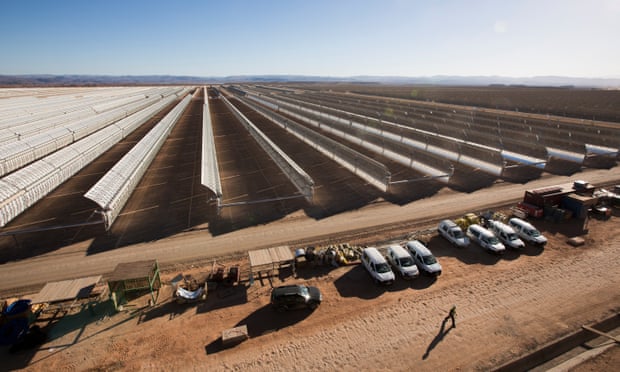 |
| The Ouarzazate solar power plant in Morocco. Catching some rays. |
In other positive news, scientists
at the Lawrence Livermore National Laboratory in California think that spongesmade with baking soda may be an improvement on similar carbon capture andstorage (CCS) technologies, both in terms of its effectiveness in capturing
emissions whilst also being less damaging to the environment. Current CCS
techniques can use toxic and expensive chemicals which may create other problems
as they capture carbon. The baking soda technology uses about 40% less energy than current methods and the optimistic researchers believe that “baking
soda might save the world!”.
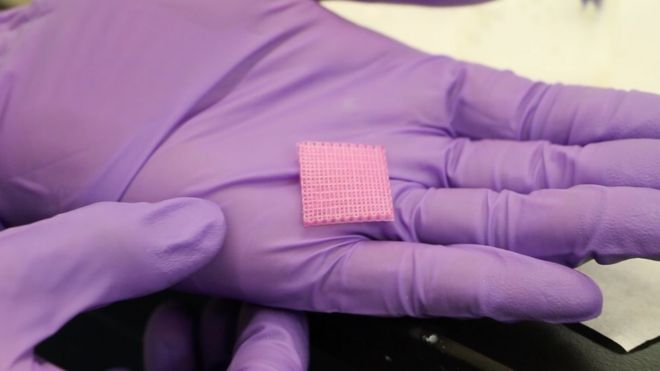 |
| A sponge containing baking soda which may help in carbon capture and storage. |
In less uplifting news, researchers
in Queensland, Australia, are reporting that “more than one-third of the coralreefs of the central and northern regions of the Great Barrier Reef” have died
in the huge coral bleaching event earlier this year”. Professor Terry Hughes,
director of the ARC Centre of Excellence for Coral Reef Studies at James Cook
University says this is a “huge wake-up call”.
So what is Australia doing
to help protect the Great Barrier Reef in light of this alert shocking news? I
mean I’d presume they’re doing a lot, seeing as it brings in tourists from all
over world and supports over 1500 species of tropical fish. But the headline
news this week is a Great Big Removal of mentions of the Great Barrier Reef from a United Nations report provisionally titled “Destinations at Risk: World Heritage and Tourism in a Changing Climate.

So why has this happened? It
seems that the Australian government, the ones who should be championing
maintaining the Great Barrier Reef, have interfered to have all references to
it removed. Their “reasons” for doing this are:
1. That they did not want the Reef to be classified as “at
risk” , having previously agreed with the UN to not list it as “in danger”,
and;
2. That the “negative commentary” would “impact on tourism”
(because we all choose our holiday destinations after reading UN reports…).
 |
| Let's pretend that the picture on the right isn't happening... |
But the crux of the matter
is by ignoring the problem, it will only get worse and the reports of damage
will only enhance in the scientific community. And more damage will surely only
result in less tourism. The Australian government is burying its head in the
sand when it should be burying it in their depleting coral. Overall, it’s
anything but bonzer.
So there we
go, some interesting titbits from the environmental news. And that’s what this
blog will aim to provide, in the same style as the original Inpsecting™ blog, pieces will be comprised of news from scientific
journals, websites with really really terrible attempts at humour thrown in for
good measure.
Til next time

No comments:
Post a Comment