Thursday, 25 August 2016

Frack to the Future? Will the UK start fracking to meet it's energy needs?

I genuinely thought that I had come up with an original blog post title. But a quick Google search told me that it has been used by everyone from the New Scientist to The Sun. A truly terrible blow to my ego...

Nonetheless, we must find the strength to continue and discuss today’s topic: fracking. 

What is fracking?

Fracking, short for hydraulic fracturing, involves drilling down into the earth and directing a high-pressure water mixture at the rock to release the gas contained within it. The high pressures at which water, chemicals and sand are injected into the rock allows gas to flow out to the well’s head. The process is usually carried out by drilling horizontally into a layer of rock, creating pathways to release gas. 
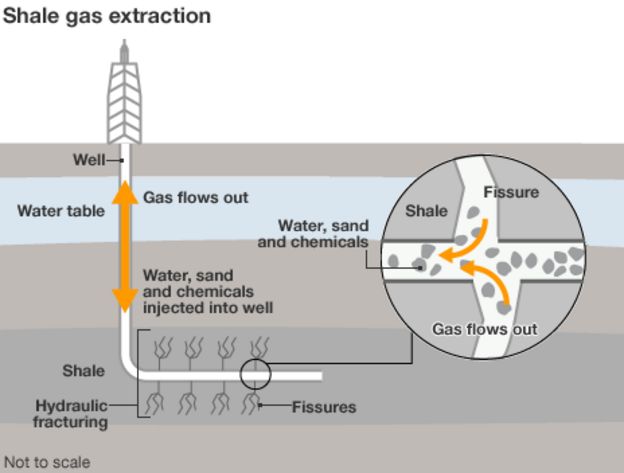
The shale gas extraction process. Source: BBC
What’s happening in the UK?

Although fracking has been commonplace in the North Sea oil and gas fields since the 1970s, the general public only became aware of the technique in 2007 when it was proposed to be used for onshore shale gas wells.

Fracking has been in and out of the press since then, with stories related to the latest plans on where to drill and protests by environmental campaigners. The last major news story related to fracking, in the news a couple of weeks ago, stated that the new prime minister, Theresa May, would allow people who live near shale gas exploration sites to be given cash payments of £20,000 so that they “benefit” from the developments. This has led Shadow Energy Secretary Barry Gardiner to accuse the prime minister of bribing people to make a decision which will not actually benefit them.

Fracking protests have been taking place across the UK for years.
Even though shale gas drilling is only at an exploratory stage in the UK, large amounts of controversy and debate have surrounded the mere thought of onshore fracking in the UK. For example, in 2011, Cuadrilla suspended test fracking operations near Blackpool after earthquakes of magnitude 1.5 and 2.2 hit the area. A study later found it “highly probable” that the drilling process triggered these quakes.  

There are also concerns about fracking in areas of natural beauty and the detrimental impacts this would have on northern landscapes where much of the UK’s gas reserves lie. The British Geological Survey estimated that northern England has 1,300 trillion cubic feet of shale gas resources. With current UK gas consumption at 2.5 trillion cubic feet a year, these reserves would keep us ticking over at the same rate for 520 years. In January 2015, MPs pledged an “outright ban” on fracking in national parks, but by December they voted to allow fracking at 1,200m below national parks, Areas of Outstanding Natural Beauty, the Norfolk and Suffolk Broads and World Heritage Sites, 

Shale gas reserves coincide with areas of natural beauty and National Parks in several areas.
Source: BBC
What’s happened in other parts of the world?

There are also cautionary tales from fracking operations in the U.S.A, many of which are related to contaminated water. Although only roughly 2% of the water consists of toxic chemicals, when billions of gallons of fluid are being used this amounts to a significant amount of contamination. The oil and gas industry has little knowledge of what to do with the contaminated water they are creating, and fracking wastes and fluids have penetrated drinking water and aquifers across several U.S. states, with a 2015 Environmental Protection Agency report finding more than 150 cases of contamination.

Other issues relate to air quality surrounding drilling sites and potential greenhouse gas emissions. For example, Colorado has seen air pollution spikes in close proximity to fracking wells and there is uncertainty as to how much methane is being released to the atmosphere from the fracking process.

Lastly, and perhaps most spectacularly, homeowners in fracking regions have reported being able to light water coming out of their kitchen sinks on fire due to gas contamination of their water supplies from fracking wells. 


What are the advantages of fracking?

After reading all of those problems, you’re probably wondering why we are even considering pursuing fracking as an option. Well of course, from an industrial point of view there are advantages. The fracking process allows drilling companies to access difficult-to-reach oil and gas reserves. In the U.S.A, oil production has been significantly boosted and gas prices have fallen. The process has potential to give the U.S.A and Canada gas security for about 100 years and could be used to generate electricity with half the carbon dioxide emissions of using coal.

A similar story could arise in the UK, with industry suggesting fracking of shale gas could contribute significantly to future energy needs and thousands of jobs would be created by allowing the process to proceed. Recent National Grid estimates state that without shale gas extraction, the UK could be importing over 90% of its gas by 2040, so steps clearly need to be taken to increase energy supply security.

Overall, the fracking debate looks likely to rumble on, with those that stand to benefit from it facing a bitter battle with the general public and environmental groups. The opposition’s environmental concerns are refuted by industry, who say the process won’t have the speculated negative impacts if carried out professionally.

Personally, however, I am inclined to think that we should be concentrating our efforts and incentives on renewable sources of energy, and ensuring a more secure energy future through those methods rather ploughing more money into fossil fuels. The risks of fracking just don’t seem worth it to me.

Til next time

Rob

Thursday, 28 July 2016

Climate Change Is Happening Faster Than We Thought And Could Get Even Worse

How about that for a clickbaity title for a blogpost. Although I didn’t quite go for “You won’t believe what scientists are saying about climate change now! This will really shock you!” or "5 ways climate change will impact you. Number 4 is crazy!" I haven’t reached those depths…

Yet…

After the depressing nature of my last piece on how Brexit is leading to uncertain future for the UK environment and energy sectors, I really really was trying to find something more positive to write about today.  But then I ended up deciding to go for how climate change could doom us all. Cheery.

By now, most of us have some awareness of climate change. And yes, despite that chilly spell we had a few weeks ago, global warming is real. Not only is it happening, but it seems to be happening quicker than previously anticipated.

Last week, the World Meteorological Organisation (WMO) informed us that June 2016 marked the 14th consecutive month of record temperatures. The temperatures over the first half of this year, combined with record carbon dioxide concentrations in the atmosphere and early and fast Arctic sea melting indicate that climate change is quickening.

News this week says that scientists have been taken by surprise by the record temperatures that have occurred so far in 2016 and have put us on track for Earth’s hottest year on record. David Carlson, director of the WMO’s climate research programme, said on Monday:

“What concerns me most is that we didn’t anticipate these temperature jumps. We predicted nothing like the rises we’ve seen. Extreme events like flooding have become the new normal”

So things really seem to be hotting up where the Earth’s climate is concerned. And there is more to be potentially concerned about. And that is methane.

You may be familiar with methane from chemistry classes at school when you messed around with the gas taps and occasionally used it to fuel a Bunsen burner. Methane also made the news last week due to viral videos from Siberia of the ground wobbling due to large bubbles of gas beneath the surface.  But although all of that seemed quite fun, where climate change is concerned, methane may not be very fun at all…

Methane plays a significant role in warming the Earth’s atmosphere and hundreds of millions of tons of it are currently contained beneath the Arctic permafrost. Warmer temperatures in the Arctic Circle are permitting the methane gas to move to the surface through soil that normally would be frozen solid. A mass release of methane from the Arctic permafrost could therefore heighten the greenhouse effect, leading to further warming and further methane releases. A positive feedback loop with not very positive consequences, if you will. Russian scientists are investigating whether some craters near Bely Island could be due to explosions from this build-up of gas, suggesting it could be released rapidly in large quantities.

Lastly, Siberia is experiencing massive wildfires right now, which can cause peatlands to thaw and release carbon, from what was a sink for millennia, to the atmosphere. And once again, more warming could lead to more fires, more release of greenhouses gases to the atmosphere, more warming and so on…. Russia is trying to downplay the size of the wildfires that are currently raging. Not like them to try and cover something up.
Fires, shown by red dots, in Siberia on July 22nd 2016, with a smoke plume extending thousands of miles west.
And it’s not just changes to the terrestrial landscape which we should be wary of when it comes to the release of methane. The clathrate gun hypothesis states that increases in sea temperatures could trigger a sudden release of methane from methane clathrate components in the seabed. A runaway breakdown of methane clathrates could drastically alter ocean acidification and, of course, the composition of the atmosphere and greenhouse effect.  Times when this process may have occurred in the past are linked to events such as the Permian-Triassic extinction event (or the "Great Dying") 252 million years ago, in which up to 95% of marine species became extinct. So probably best to try and avoid that happening.

Given that the clathrate deposits destablilise from the deepest part of their stability zone, which is typically hundreds of metres below the sea bed, the process of ocean sediment warming and methane release would take a thousand years or more. However, once started, the clathrate gun hypothesis outlines an irreversible, runaway process. This isn’t one of those problems we can fix easily if it begins…. But given the far off nature of the problem no one outside of academia is probably concerned about it.

So is there anything we can do to help our understanding of what is going on, and what may be going on in the event of even greater climate change?

David Carlson suggests that we need to get better at predicting “not only how frequent and intense [extreme] events will be – but how long they will last”. This will require better global weather and climate data, particular from areas currently lacking in detail, such as Central Africa, Central America and the Arctic.

And if that’s not enough to convince you that something needs to be done, Leonardo DiCaprio thinks “we are the last generation that hasa chance to stop climate change before it’s too late”. Here's to you Leo


Scaremongerng complete

Til next time


Rob

Wednesday, 6 July 2016

What “Brexit” may mean for energy, the environment and climate change in the UK

It’s now nearly two weeks since the news came through that the United Kingdom had voted to leave the EU. The dust is beginning to settle, but it’s settling into a landscape that no one seems quite sure how to interpret yet. Most of the pressing questions are concerning the NHS, the single market and immigration, but there’s enough vitriol already surrounding those issues and who promised what and who decided actually I didn’t ever say that (mentioning no names). So whilst the country slowly disintegrates around us, this is my attempt at explaining what may happen to energy, the environment and climate regulations in the post-”Brexit” (I seriously hate that word) UK.

Energy

A report in the Guardian suggests that leaving the EU will make it more difficult for the UK to make the transition to a clean energy future. Certain analysts have suggested that the uncertainty leaving the EU has created could mean that investments in clean energy are reduced, which is pretty problematic seeing as £20 billion is currently required per year to replace our ageing, dirty power plants. The uncertainty in clean energy investment in the UK is already apparent, with Siemens putting its investment in UK wind power on hold following our decision to leave the EU.

There may also be problems for consumers, with pessimistic experts and the National Grid suggesting that bills will rise and there are increased chances of power supplies not being met. However, more optimistic experts suggest that the global movement towards cleaner energy sources and the UK’s strong climate change targets will keep the transition to cleaner energy sources progressing as before.

The UK’s energy future will be decided to a large extent by the negotiations to come between the UK and the EU. If the UK, in a similar way to Norway, maintains access to Europe’s internal energy market then the UK’s future energy prospects may be more favourable. On the other hand, a severance of our membership in the internal energy market could create large amounts of uncertainty.

The Environment

Writing for The Guardian, Damian Carrington has highlighted just how low the environment was on the campaigning agenda in the run-up to voting day. The Institute of Environmental Management and Assessment (IEMA) have also given a strong indication that voters were not given sufficient information to take environmental issues into account when they cast their votes.

Carrington also suggests that voting to leave has created uncertainty regarding our regulations for environmental issues such as pollution, wildlife and farming. These concerns are backed up by the Environment and Sustainability Professionals, who have highlighted the importance of EU policy and regulation in pushing forward environmental improvements.

Additionally, the Institute of Environmental Management and Assessment gathered opinions from 4,000 “experts” concerning the key environment and sustainability risks and opportunities that could arise from “Brexit”. An overwhelming majority of these experts have indicated that the UK has “benefitted from the EU environment and climate policy and that European membership has been positive for UK business”. Furthermore, 82% believed that operating within the EU provides a more stable policy landscape which is more effective for the environment over the medium to long term and 81% that European laws and regulations provide important frameworks for delivering environmental protection and improvements. Lastly, two-thirds believe that waste, recycling and circular economy performance would be reduced with Britain outside of the EU. None of that sounds good to me…

Climate Change

The news doesn’t appear to be good when it comes to the UK meeting its climate change targets either. Amber Rudd, the climate and energy secretary, has said that leaving the EU will make it more challenging for us to play a significant role in tackling climate change. Although Rudd has given reassurances that “our commitment to dealing with it [climate change] has not gone away”, this has not been enough to placate all concerned, with Greenpeace suggesting that Rudd’s “soothing words are not enough” and that the decision to leave the EU will decrease the confidence of investors in or green energy market.

Andrea Leadson, one of the three remaining conservative leadership hopefuls, has also promised that the government remains totally committed to meeting its climate change targets no matter what happens in our negotiations in leaving the EU. Leadson has also stated that obligations under the Climate Change Act will not change following the vote. This Act requires the UK to reduce its carbon dioxide emissions by 80% from 1990 levels by 2050. The current government have paved a way for this target to be met, which will hopefully survive the likely tumultuous changes to come.

There are, however, concerns as to where the “Brexit” vote leaves us with regard to our commitments to the Paris Agreement. The EU countries were widely expected to sign in unison, but now the ratification of the Agreement may be delayed for years until the UK has formally left the Union. Ed Miliband has called on David Cameron to ratify the Paris agreement before he leaves office, but the prime minister has not yet spoken of this issue. However, UK support for the Paris Agreement would seem to be more likely now that climate change sceptic Boris Johnson has pulled out of the race to be conservative leader. Small victories…

Conclusion

At this stage, as with most things in our post-”Brexit” landscape, the future of the environmental, energy and climate change regulations in the UK are posing several questions which cannot be answered definitively at this time. Although some politicians have preached re-assurance, the initial signs are not hopeful. Much will depend on the coming weeks, months and years of negotiations and political changes. Let’s just hope that the lights stay on in the meantime….

Til next time

Rob

Links:


http://time.com/4389923/”Brexit”-climate-change/

Monday, 13 June 2016

Carbon Sequestration: Is a New Method Ready to Rock?

It seems that summer has finally arrived. The sun is shining, the birds are singing and an international football tournament (which England are 99% certain to win) is about to begin. But today's post is not about any of those things. Rather it concerns interesting new research that suggests sequestering atmospheric carbon dioxide by injecting it into basaltic rock may be a "climate change breakthrough". But how? And why?

What is carbon sequestration?

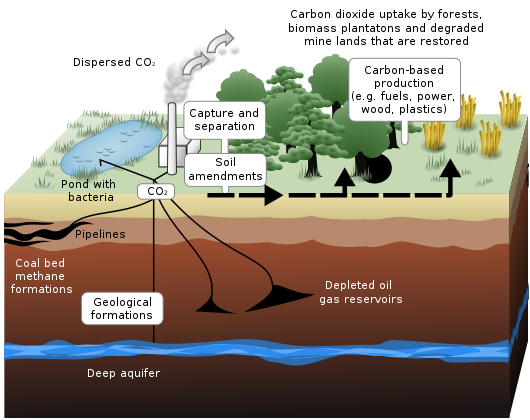
Carbon sequestration involves capturing atmospheric carbon dioxide and finding a way to store it for long periods of time. It's an active area of research to try and combat anthropogenic climate change, which is being fueled by the enhanced greenhouse effect. The UN Intergovernmental Panel on Climate Change have stated that carbon capture and storage is "hugely important to tackling climate change in the most cost-effective way".

Carbon dioxide is captured naturally from the atmosphere via chemical, biological or physical processes, but artificial processes have also been devised to achieve a similar goal including sequestering carbon dioxide in ocean water, reservoirs and aging oil fields.

Schematic showing both terrestrial and geological sequestration of carbon dioxide from a coal-fired power plant.

What is the new technique? 

The new technique involves pumping carbon dioxide underground and turning it rapidly into stone. Pumping carbon dioxide into volcanic rocks which underlay Iceland accelerated a natural process in which basalts react with carbon dioxide to form the carbonate minerals that comprise limestone. The researchers expected it take possibly thousands of years for the carbon dioxide to turn into stone, but they were stunned to discover that it only took two years. .

Basalt: a lump of rock with more uses than being a pet?

What are the benefits of the new technique...?

In the conventional carbon capture and storage process outlined at the start of this piece, the carbon dioxide stored in old oil fields could potentially leak as there are no rocks present which could mineralise the carbon dioxide into stone. Because of this leakage potential, the stores have to be monitored, adding to the cost of the process. Additionally, in the Netherlands and Germany, conventional carbon capture and storage has been supsneded due to concerns over earth tremors. 

The new method promises a cheaper and more secure way of burying carbon dioxide, produced from fossil fuel burning, underground. Juerg Matter, the lead author of the research which has been published in Science, has said that turning carbon dioxide into stone is the "ultimate permanent storage". Furthermore, the conventional methods necessitate the carbon dioxide to be removed the mixture of gases in emissions, an expensive process which is not required in the new procedure.

...and what are the potential stumbling blocks?

Water. The process is a thirsty one, requiring 25 tonnes of water for each tonne of carbon dioxide buried. However, this could be overcome by using seawater if the process were to be carried out at coastal sites. A second concern is that subterranean microbes could break down the carbonate into methane, a much more powerful greenhouse gas than carbon dioxide. However, there is no evidence of this occurring from the initial research in Iceland.

Sea you soon? With a lotta water needed coasts may be the ideal place for new carbon storage.

What can we expect in the future?

The initial Iceland research project is being scaled up with the aim of burying 10,000 tonnes of carbon dioxide a year. There is also great potential for this sequestration process to take place in other parts of the world, as the basalt rocks can be found commonly on the floors of all the oceans and under parts of other land masses.  Testing has been taking place at the Columbia River Basalts in Washington and Oregon in the U.S.A. and Martin Stute of Columbia University has said that this sequestration process could be used for "power plants in places where there's a lot of basalt". Columbia University are also investigating a rock type in Oman, which may be even more effective at turning carbon dioxide into basalt.

So, the future for carbon storage is bright, right?

Well, yes and no. On the research covered here, Professor Stuart Haszeldine of the University of Edinburgh has described the new method as "terrific" and that it "may well provide a low-cost and very secure remedy...where suitable rocks exist" but also stressing that "this needs to be used as well as all the existing propositions...no single remedy is anywhere near big enough or fast enough".

Other methods are indeed being developed. For example, ExxonMobil are supporting a project which utilises fuel cells to make capturing carbon dioxide cheaper and Ford have been using carbon dioxide to make foam, which they are using in the vehicle production.

But it's not all good news. Globally, carbon capyure and storage has not developed as quickly as was jope, and at the end of last year, the UK government cancelled a £1billion competition for carbon capture and storage technology, despite promising it in their general election manifesto. Who ever would have expected that...?
Thumbs up if you broke your promise Dave

Til next time

Rob

Find out more about the CarbFix project here: https://www.or.is/english/carbfix-project

Thursday, 2 June 2016

Inspecting the Environment: A New Bloggining

They say that when you've blogged once, the desire to blog again never leaves you. Actually, I'm not sure anyone has ever said that, but here I am, back again, with my new blog: Inspecting the Environment. 
It was quite a challenge coming up with a new name for this blog though.
"ThatEnvironmentBlog?” A bit boring...
"EverydayIsAChanceToLearnSomethingNewAboutTheEnvironment?" Too long!
"BloggyMcBlogface?" Ok, that's just getting old... 
Gone but not forgotten. Yet.
But then it came to me.
After great thought, I took the massive decision to expand the Inspecting™ blog brand, building upon the unequivocal success of my previous blog Inspecting Invaders. That's right, watch out Murdoch, there's a new mass media company in town... 
He's looking worried...
Yes, after blogging about invasive species for a fair old while, I've decided to expand my horizons into the wider environment. I mean sure, I'll miss my old friends such as Japanese Knotweed and the Walking Catfish, but this isn't a goodbye to invasive species, more a "see ya later!” And who knows, they may even crop up here now and again...
The Walking Catfish. Can you ever really say goodbye to that face?
Now you may be thinking *ARE YOU MAD? Rob, how can you possibly hope to cover EVERYTHING that’s going on in the environment?!* Well, dear readers, alas, one man alone cannot achieve such a deed, but I will endeavour to bring you exciting titbits on a regular basis.

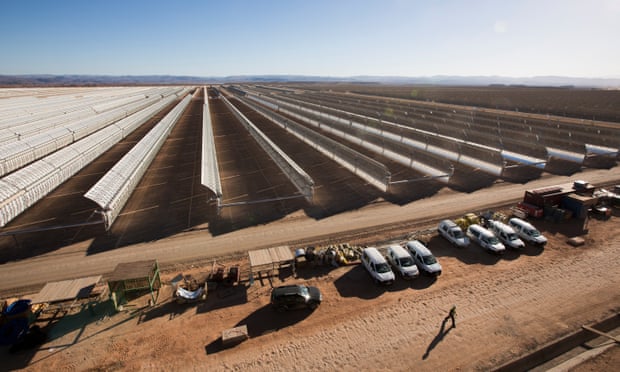
For example, according to a recent report in The Guardian, 2015 saw record levels of clean energy investment and implementation. The increase on the previous years’ generation by 147 Gigawatts is as much as Africa’s entire power generating capacity. With countries lke China investing billions in renewable energy and new developments coming along all the time in other parts of the world, such as the world’s largest solar power plant in Morocco, renewable energy looks to be a real grower. Who knew?

The Ouarzazate solar power plant in Morocco. Catching some rays.
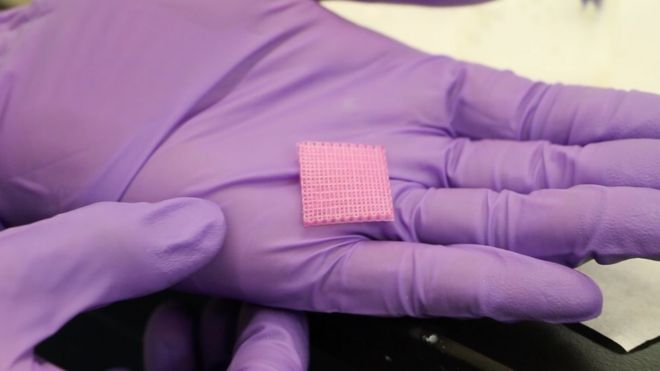
In other positive news, scientists at the Lawrence Livermore National Laboratory in California think that spongesmade with baking soda may be an improvement on similar carbon capture andstorage (CCS) technologies, both in terms of its effectiveness in capturing emissions whilst also being less damaging to the environment. Current CCS techniques can use toxic and expensive chemicals which may create other problems as they capture carbon. The baking soda technology uses about 40% less energy than current methods and the optimistic researchers believe that “baking soda might save the world!”. 

A sponge containing baking soda which may help in carbon capture and storage.
In less uplifting news, researchers in Queensland, Australia, are reporting that “more than one-third of the coralreefs of the central and northern regions of the Great Barrier Reef” have died in the huge coral bleaching event earlier this year”. Professor Terry Hughes, director of the ARC Centre of Excellence for Coral Reef Studies at James Cook University says this is a “huge wake-up call”.

So what is Australia doing to help protect the Great Barrier Reef in light of this alert shocking news? I mean I’d presume they’re doing a lot, seeing as it brings in tourists from all over world and supports over 1500 species of tropical fish. But the headline news this week is a Great Big Removal of mentions of the Great Barrier Reef from a United Nations report provisionally titled “Destinations at Risk: World Heritage and Tourism in a Changing Climate.


So why has this happened? It seems that the Australian government, the ones who should be championing maintaining the Great Barrier Reef, have interfered to have all references to it removed. Their “reasons” for doing this are:

1.    That they did not want the Reef to be classified as “at risk” , having previously agreed with the UN to not list it as “in danger”, and;
2.    That the “negative commentary” would “impact on tourism” (because we all choose our holiday destinations after reading UN reports…).


Let's pretend that the picture on the right isn't happening...

But the crux of the matter is by ignoring the problem, it will only get worse and the reports of damage will only enhance in the scientific community. And more damage will surely only result in less tourism. The Australian government is burying its head in the sand when it should be burying it in their depleting coral. Overall, it’s anything but bonzer.

So there we go, some interesting titbits from the environmental news. And that’s what this blog will aim to provide, in the same style as the original Inpsecting™ blog, pieces will be comprised of news from scientific journals, websites with really really terrible attempts at humour thrown in for good measure. 

Til next time